

Increased U.S. Imports Amid Tariff Uncertainty: What Small Businesses Need to Know
The first half of the year has seen a notable surge in imports to the United States as companies brace for steep tariff increases on goods coming from major trading partners like Canada, China, the European Union, and Mexico. While this increased influx of goods appears beneficial on the surface, the effects of tariffs and trade policies are complex, particularly for small and medium-sized businesses (SMBs) engaged with the government or considering contracting with federal agencies.
Understanding the Current Landscape
Since President Trump’s inauguration, American companies have faced the looming threat of heavy tariffs. The World Trade Organization (WTO) even suggested that the global trade landscape could shrink by 0.2% this year, primarily due to decreases in U.S. imports. However, contrary to this prediction, the WTO has recently revised its outlook, now forecasting modest growth of nearly 1% in trade volumes largely due to what’s termed “frontloading”. A strategy where businesses import goods in anticipation of future tariffs.
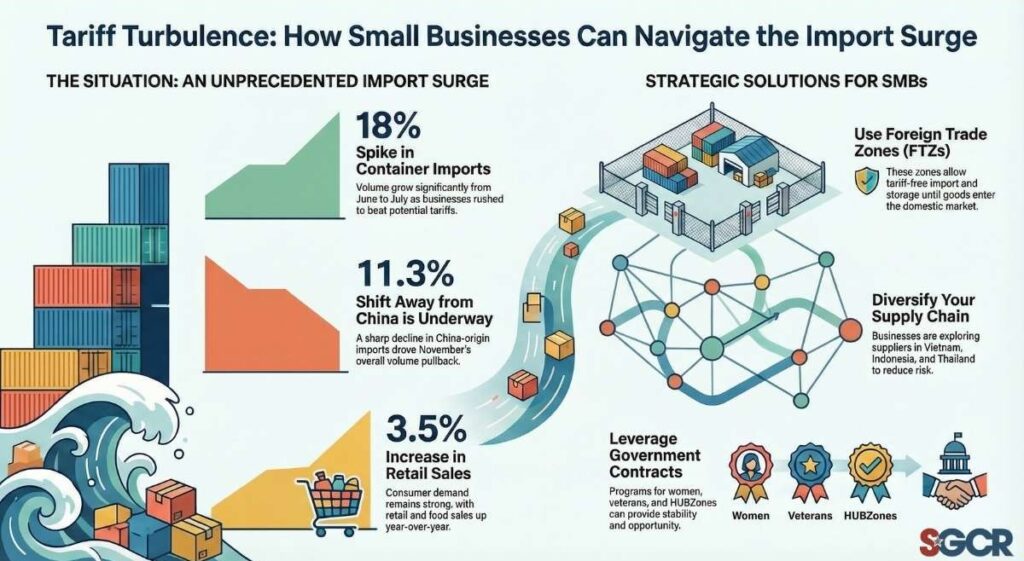
According to Descartes, a trade intelligence provider, the volume of container imports grew by more than 18% from June to July, and up 2.6% compared to July of the previous year. As seasonal demand traditionally spikes in mid-summer, these figures also suggest that businesses are hurrying to adjust to the evolving trade climate by bringing in larger quantities ahead of potential tariff hikes.
The Numbers: Retail Sales at a Glance
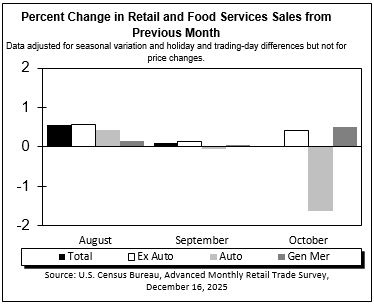
According to the U.S. Census Bureau, retail and food service sales for October 2025 were pegged at $732.6 billion. Not only does this figure reflect a minimal change from the previous month, but it also marks an increase of 3.5% compared to October 2024.
If you break down these figures a bit further for a clearer picture:
- Total sales from August 2025 through October 2025 showed a rise of 4.2% compared to the same period last year.
- Retail trade sales were up 0.1% from September 2025 and saw an overall increase of 3.4% from last year.
- Notably, non-store retailers surged ahead with a dramatic increase of 9% year-over-year, while food service places enjoyed a 4.1% upswing from a year ago.
Navigating Tariff Changes
Recently, the current administration announced a 30% tariff on imports from China would face a 90-day delay, meaning current duties stand at 20% plus additional tariffs on other sectors like aluminum and steel. For SMBs, understanding these fluctuations is crucial, as they can greatly impact budgeting and procurement strategies. The ongoing impulse by companies to seek out alternative suppliers is clear, with many looking to shift production or procure goods from countries with lower or no tariffs.
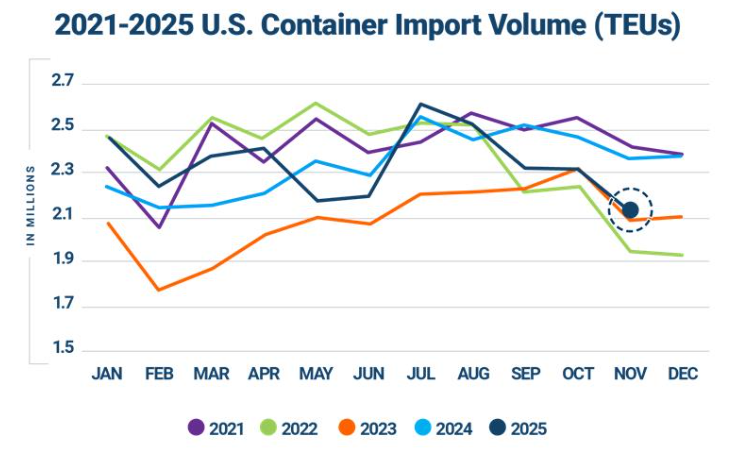
“In November 2025, U.S. container imports totaled 2,183,048 twenty-foot equivalent units (TEUs), declining 5.4% from October in line with the typical month-over-month seasonal drop, November’s shorter month and Thanksgiving-related slowdowns. With a sharp 11.3% decline, China-origin imports were a major driver of November’s overall volume pullback, occurring against a backdrop of ongoing U.S.–China policy adjustments. Port transit delays also edged higher in November, reflecting the seasonal slowdown but not signaling any systemic congestion. Heading into year-end, the legal challenge to Liberation Day tariffs and continued carrier caution in the Red Sea corridor are additional factors contributing to a cautious but steady outlook for U.S. importers.”
– Descartes – Global Train Intelligence Report November
The Role of Foreign Trade Zones
One strategy gaining traction among businesses, especially SMBs, is the use of Foreign Trade Zones (FTZs). These zones allow for the importation and storage of products without being subject to U.S. tariffs until the goods enter the domestic market. This option can provide significant financial flexibility for businesses facing high tariff charges. As Jackson Wood of Descartes points out, using FTZs allows businesses to secure supplies without upfront costs on tariffs, which can be a game-changer for small companies operating on tight margins.
Supply Chain Adjustments
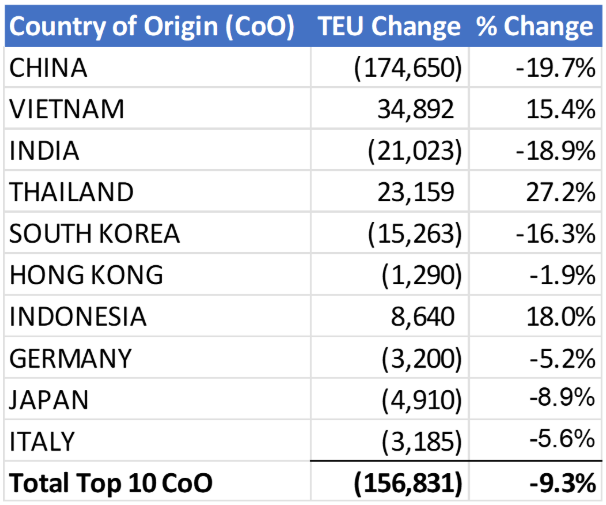
With the unpredictability of supply chains influenced by tariffs, many businesses find themselves in a tough position. The risk of overhauling supply chains is high, especially when companies are reevaluating how they source products. As observed, imports from countries like China, South Korea, India are slowing yet Vietnam, Indonesia, and Thailand have surged, often due to businesses seeking to mitigate risks associated with reliance on Chinese goods. However, making these changes can take years, if not decades, and SMBs need to weigh their options carefully.
Many companies are beginning to optimize their supply chains by leveraging domestic production and low-tariff countries, but they remain cautious, waiting for more stability in trade policies before committing to significant changes.
November 2024 to November 2025 (YoY) Comparison of U.S. Import Volumes from Top 10 Countries of Origin
Impact on Food Supply Chains
The agricultural sector faces unique challenges amidst these tariff changes, particularly for businesses reliant on perishable goods. Brazil, now facing a 50% tariff, is a key supplier of coffee beans, alongside Colombia and other countries like Canada and Mexico, which also face growing duties on essential food products. With many businesses hesitant to overhaul their supply strategies under the current chaotic environment, balancing costs against consumer preferences becomes vital.
As Amanda Oren from Relex notes, “a significant shift is happening in sourcing decisions, with many leaning towards lower-tariff countries or increasing domestic production, but investments seem to be on hold.”
Supporting Small Business with Government Contracts
It’s crucial to highlight that SMBs, especially those owned by veterans, women, or those within a HUBZone, can benefit from government programs designed to support small businesses. Programs such as WOSB, VOSB, SDVOSB, and HUBZone certifications can open doors for opportunities in government contracting and help navigate the complexities of tariff-related challenges. Select GCR specializes in helping businesses with government contracting applications and ensuring that they are well-positioned to take advantage of these opportunities.
For additional insights on government contracting that can enhance your business strategy, visit our page on Government Programs for Small Businesses.
Conclusion
In conclusion, while the surge in imports signals a reaction to potential tariffs, the reluctance among SMBs to make significant changes under uncertain conditions is understandable. Emphasizing flexible strategies like utilizing FTZs and considering sourcing alternatives can help small businesses not only survive but thrive amidst this evolving trade landscape. Aligning with government programs can provide the much needed support, stability and opportunities for the growth you’re looking for.
Sources:
1. WTO Tariff Forecast World Trade Organization
2. Descartes Trade Intelligence Report
3. U.S. Department of Agriculture Data on Food Imports
4. U.S. Census Bureau – Advance Estimates of U.S. Retail and Food Services Sales, October 2025
5. IBISWorld – Retail Industry Trends
For further reading and resources, check out Select GCR’s website.
I invite you to schedule a consultation or reach out to learn more about how we can assist your business. Together, we can position your company for success in the current landscape.