
Government Forecasting 101
What is government forecasting?
A financial forecast is a fiscal management tool that presents estimated information based on past, current, and projected financial conditions. This will help identify future revenue and expenditure trends that may have an immediate or long-term influence on government policies, strategic goals, or community services.
Forecasting estimates future trends, demands, and opportunities in the government contracting market. Forecasting can be used to:
- Create a strategic context for evaluating the budget
- Establish a baseline for measuring the long-term effects of decisions
- Test the economic effects of different funding scenarios
- Establish a baseline projection of revenues and expenditures
What are the methods of government budget forecasting?
FORECASTING TECHNIQUES
Local governments typically use one or a mixture of three techniques for forecasting revenues and expenditures: expert judgment and analysis, deterministic forecasting, and econometric modeling.
Expert Judgment:
A technique that involves using the expertise of a subject matter expert to provide data or an opinion on a topic. It’s often used when other methods are not practical or cost-effective, or when traditional science can’t provide clear answers. Expert judgment is used in a variety of fields, including project management, risk analysis, and scientific inquiry.
Deterministic Forecasting:
A method of prediction that uses a single solution or “best-case” value for a future outcome. It’s based on the assumption that future outcomes can be accurately determined using mathematical models and known variables.
Econometric Modeling:
A statistical method used to study economic systems and forecast future economic developments:
- Process: involves using statistical methods to analyze the relationship between economic data and theories. This process includes specifying a theory, gathering data, and using statistical methods to analyze the data.
- Purpose: to understand how economic forces affect supply, costs, and demand. They can be used to analyze an entire economy, an industry, or a single business.
- Data: use a variety of data, including price and quantity observations, time series data, cross-section data, and panel data.
- Methods: estimated using a variety of methods, including ordinary least square (OLS), cointegration, and basic econometrics.
What’s the difference between budgeting and forecasting?
A budget outlines planned business expenses and revenue over a period. Forecasting is a well-thought-out projection of business outcomes for a future period. A budget is usually prepared for the short-term, while the forecasting process happens in the short and long term.
How does forecasting work?
Forecasting is a method of making informed predictions by using historical data as the main input for determining the course of future trends. Companies use forecasting for many different purposes, such as anticipating future expenses and determining how to allocate their budget.
What are the 2 main types of forecasting?
Most businesses aim to predict future events so they can set goals and establish plans. Quantitative and qualitative forecasting are two major methods organizations use to develop predictions. Understanding how these two types of forecasting vary can help you decide when to use each one to develop reliable projections.
Qualitative vs. Quantitative Forecasting Methods:
The practical difference between the two methods is that the former relies on objective numerical data, whereas the latter makes projections based on the subjective interpretation of one or more experts.
What is the federal forecasting app?
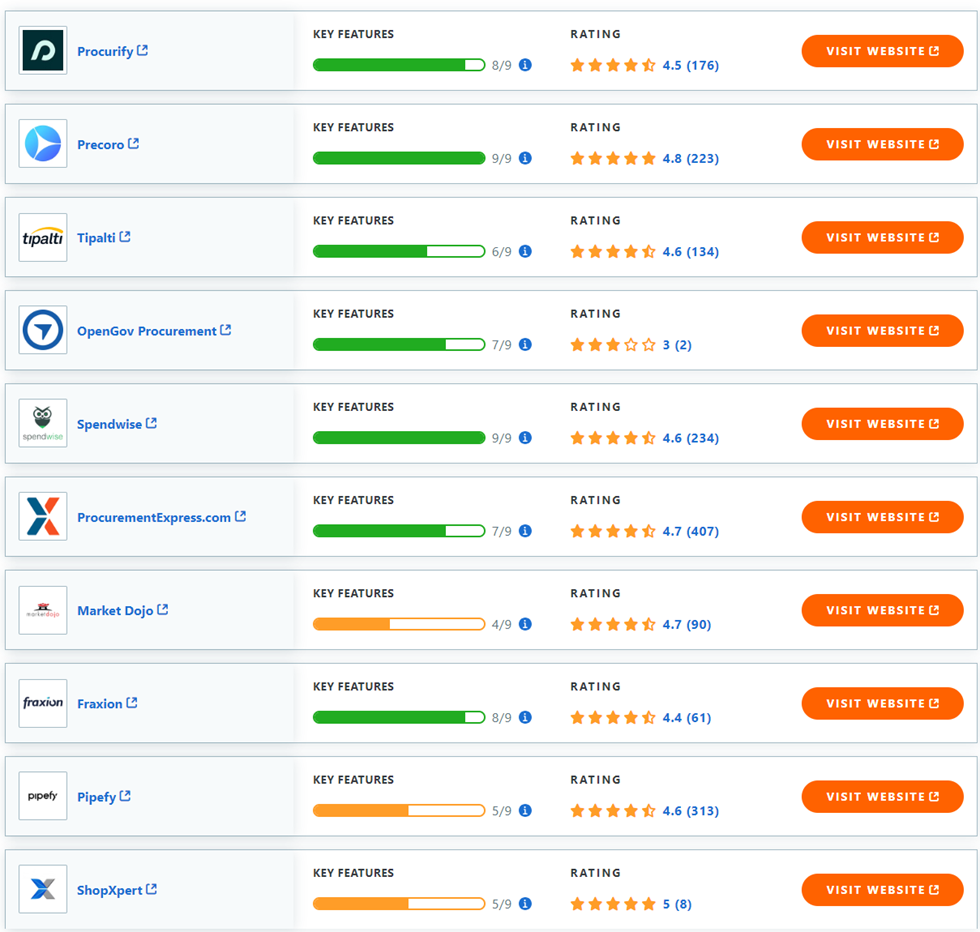
Federal Forecasting Application is a platform that brings all the government’s future contracting opportunities and related information at one place where you can discover, download and access all government forecast related documents easily.
Application Examples:
How to do a budget forecast?
To generate your financial forecast, follow these steps:
- Define Your Focus Areas. First, identify the key metrics the forecast needs to cover.
- Update with the Latest Financial Data.
- Establish a Forecasting Period.
- Identify Patterns and Trends.
- Adjust for Influencing Factors.
How to do a financial forecast?
The 7 steps to financial forecasting:
- Define the purpose of a financial forecast.
- Gather past financial statements and historical data.
- Choose a time frame for your forecast.
- Choose a financial forecast method.
- Document and monitor results.
- Analyze financial data.
- Repeat based on the previously defined time frame.