

Harnessing Government Innovations with DARPA: Starting at the beginning
As a small or medium-sized business (SMB) looking to collaborate with the U.S. government, you are entering a realm filled with immense possibilities and we’re here to guide you through it. Whether you’re already contracted with the government or are just beginning to understand this unique landscape, it’s important to recognize the opportunities and programs available that can help your business grow.
The Defense Advanced Research Projects Agency, commonly known as DARPA, plays a critical role in advancing technology for national security. Established in 1958, DARPA was formed as a response to the Soviet Union’s launch of Sputnik, signifying America’s commitment to maintain leadership in technological innovation. The agency is committed to developing breakthrough technologies that not only cater to military needs but also have a profound impact on civilian life.
What Does DARPA Do?
DARPA’s mission is centered around preventing technological surprises which could threaten U.S. security. This agency funds high-risk research projects that often lead to significant advancements. Through collaboration with inventors in academia, industry, and government, DARPA pushes the boundaries of what is possible and introduces transformational technologies that redefine strategies in both military and civilian contexts.
Innovations from DARPA have reshaped our everyday lives – many technologies that we consider normal today stem from its projects. For example the website states:
- Challenges that invite ideas from nontraditional inventors, with prizes up to $10M
- Seedlings that move concepts from “disbelief” to “mere doubt”
- Explorations that accelerate the timeline from concept to award
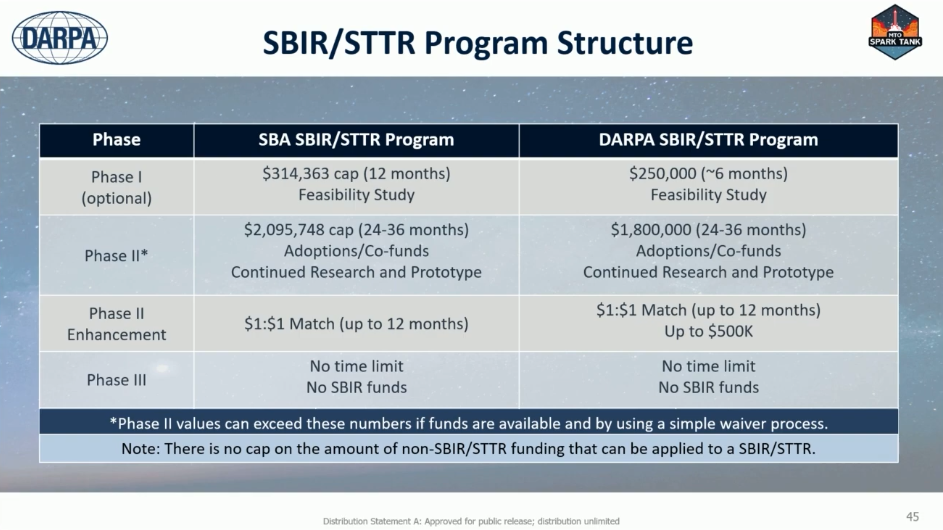
- SBIR/STTR initiatives that can lead to new programs
As a small or medium-sized business (SMB) interested in contracting with the government, understanding DARPA’s operations can open doors to opportunities where your innovative solutions could align with national needs. This program has spawned a slough of noteworthy companies such as:
- Siri Inc. (now Apple): Stemmed from DARPA’s 2003 “Cognitive Assistant that Learns and Organizes” (CALO) project.
- Boston Dynamics: Gained prominence through DARPA robotics challenges.
- Google/Waymo (Autonomous Vehicles): Directly resulted from the DARPA Grand Challenge robotic car races.
- BBN Technologies (now Raytheon BBN): Developed the first routers for ARPANET.
- Sun Microsystems: Leveraged DARPA funding for BSD Unix development.
- Netscape: Grew out of DARPA-supported NCSA Mosaic web browser development.
- Quantum Computing Companies: DARPA currently supports firms like IonQ, Rigetti Computing, and Atom Computing.
- Boeing and Lockheed Martin: Developed X-planes under DARPA research contracts.
The Evolution of Technology and Government Support
The history of technological advancement is filled with compelling stories of how innovations revolutionized sectors, spurred economic growth, and provided solutions to pressing national challenges. From the early days of the internet, set in motion by ARPANET’s packet-switching technology, to the revolutionary developments in unmanned systems like the USX-1 Defiant, government investment in research has been pivotal in these advancements.
The real story lies in how these innovations aren’t solely the products of large corporations or institutions but also provide pathways for smaller businesses to contribute and thrive. By getting involved with government programs, your SMB can benefit from the expertise, infrastructure, and resources that come from public-sector collaboration.
Understanding Government Contracting
Before diving into specifics, it’s essential to get acquainted with the government procurement process. Government contracts can be complex, but there’s potential for lucrative opportunities in various areas. The Small Business Innovation Research (SBIR) program, for example, invests in small firms to engage in federal research and development that has commendable commercial potential. A fascinating case is the Cyber First Aid initiative, which rehabilitated a hacked medical device in just 16 seconds underscoring the rapidly evolving nature of technology solutions that small businesses can offer.
For SMBs, government contracting is not just about winning bids, it’s about establishing partnerships that foster growth and innovation. Understanding how to navigate the pre-award and post-award processes is crucial, and we guide you through these intricacies at Select GCR.
Programs Tailored for Veterans, Women, and Minorities
For many SMB owners, especially veterans, women, and minority entrepreneurs, additional resources are available to ease the path of entering the government contracting arena. Programs like:
1. Veteran-Owned Small Business (VOSB)
2. Service-Disabled Veteran-Owned Small Business (SDVOSB)
3. Women-Owned Small Business (WOSB)
4. Minority-Owned Business 8(a)
designations can provide competitive advantages during the bidding process.
The HUBZone program is another significant opportunity for qualified businesses located in historically underutilized business zones. It offers contracting assistance, which can be vital for stimulating local economic growth. If you’re eligible for any of these programs, don’t hesitate to leverage them to enhance your positioning in the government sector.
Building Relationships and Partnerships
Success in government contracting often relies on building strong relationships and networking. Whether you’re at a local event, a trade show, or even participating in online forums, making connections is key.
At Select GCR, we emphasize the importance of not only understanding the requirements but also knowing who the key players are in your focus area. For instance, if your expertise lies within chemical synthesis or advanced machine learning, showcasing your capability during industry events can attract the right attention. Check out our [blog](https://selectgcr.com/blog/) for tips on effective networking strategies. DARPA programs cover a wide array of industries including:
- Information Innovation & Computing: Focuses on AI, cybersecurity, software-defined systems, and big data analysis to enhance battlefield awareness and decision-making.
- Microsystems & Electronics: Develops advanced semiconductor manufacturing, photonics, and quantum computing technologies to maintain economic and military superiority in microelectronics.
- Biotechnology & Health: Invests in human-machine interfaces, synthetic biology, and battlefield medicine, such as on-demand pharmaceuticals.
- Aerospace & Tactical Systems: Supports the development of autonomous systems, advanced sensors, hypersonic systems, and specialized aeronautics for defense.
- Materials & Manufacturing: Researches new materials, additive manufacturing, and robotics for advanced aerospace and ground equipment.
- Defense & Security Sciences: Covers fundamental math, physical sciences, and complex systems modeling for potential technological surprises.
Challenges Faced by SMBs and How to Overcome Them
Entering the government contracting realm is not without its challenges. The ambiguous language of contracts, extensive paperwork, and the sheer volume of regulations can be daunting for many SMB owners. However, the good news is that with the right guidance, these obstacles can become manageable.
For instance, understanding the nuances of manageable RFPs and proposals can significantly increase your chances of success. At Select GCR, we assist businesses by providing proposal writing services, helping you create compelling and compliant submissions that enhance your competition edge in the marketplace. Check our resources on proposal writing for comprehensive assistance.
Leveraging Technology for Growth
Innovation remains the cornerstone of government projects, and technology is often at the heart of these initiatives. Investing in your company’s technological infrastructure or showcasing technological advancements in your own products can set your business apart.
Programs focusing on deep machine learning algorithms and quantum computing are a few examples of how technology is changing the landscape. By aligning your business strategy with these technological frameworks, your SMB can tap into lucrative government contracts that prioritize innovation and effectiveness.
Conclusion: Your Path to Government Contracting
The investment in public-private partnerships has proven beneficial, not just for the government, but for businesses like yours. Engaging in government programs can lead to unprecedented opportunities that fuel both your business growth and innovation landscape.
As you consider this exciting path, remember that Select GCR is here to help. Our platform offers a wealth of resources including the SBIR overview, information on government contracts, and how-to guides specifically tailored for SMBs. Ensure you are prepared to tackle the complexities of government contracts and take advantage of the programs available to you.
Understanding these facets of government contracting can empower your business to not only participate in but thrive in the public sector. With the right tools and guidance, your SMB can make substantial contributions to federal projects and evolve alongside ongoing advancements in technology.
Sources:
1. U.S. Small Business Administration – Government Contracting Basics.
2. National Institute of Standards and Technology (NIST) – SBIR Program.